

The question of school readiness is one of the most stressful questions that families of children with autism face. Kindergarten registration deadlines arrive whether a child is ready or not, and the gap between what a school environment requires and what a child can do right now can feel enormous. The good news is that school readiness is not an all-or-nothing milestone — it is a set of specific, teachable skills, and ABA therapy is well-positioned to target them directly. This post outlines what school readiness typically looks like from a behavioral perspective and what families can do to support it before the first day of school.
Ask about school readiness programming at Summit Therapies
Call (407) 732-2487 or visit the contact page to learn about available services for children approaching school age.
What School Readiness Actually Means
School readiness is not primarily about knowing letters, numbers, or colors — though those are useful. From a behavioral and developmental standpoint, school readiness is about whether a child has the foundational skills to function in a group learning environment. That includes skills in five broad areas: communication, social behavior, following routines, self-care, and self-regulation.
A child who can identify the alphabet but cannot follow a two-step direction, sit with a group, or communicate a basic need will face significant challenges in a kindergarten classroom. Conversely, a child who has not yet mastered letters but can tolerate group instruction, make requests when needed, and manage transitions may have a much smoother entry into school. ABA therapy targets the functional skills that make classroom participation possible — and that work can begin well before a child’s first day.
Communication Skills That Support School Success
Requesting Wants and Needs
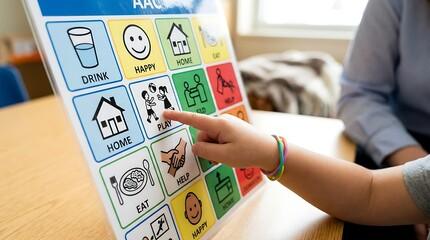
The ability to communicate a need — more time, a bathroom break, help with a task, an end to an uncomfortable activity — is foundational to school participation. Children who cannot yet communicate a request directly may express the need through actions that adults must interpret. ABA therapy targets functional requesting across multiple communication modalities, including verbal communication, picture exchange, and AAC devices.
Following Directions
Classroom instruction depends on a child’s ability to follow one- and two-step directions from an adult who is not a parent, in the presence of distractions, within a group setting. Children who can follow directions one-on-one but not in a group may need targeted practice in that specific context. This is an area where center-based ABA and small group programming can be particularly effective, since the clinic environment allows structured practice with other children.
Responding to Name and Group Instructions
Teachers in a classroom of 20 or more children do not repeat instructions for each student individually. Children who need their name called multiple times before responding, or who do not reliably attend to group directions, may miss significant amounts of instruction. ABA therapy can target response to name, attending behaviors, and response to group instruction in structured, data-informed ways.
Social Behaviors That Support Classroom Participation
Tolerating Proximity to Peers
Before a child needs to make friends or participate in cooperative play, they need to tolerate being near peers without distress. For children who are highly sensitive to noise, physical contact, or unpredictable peer behavior, the classroom can be overwhelming. Building tolerance for peer proximity — and eventually positive associations with peer interactions — is a meaningful early school readiness goal.
Taking Turns and Waiting
Turn-taking and waiting are embedded throughout the school day: waiting for the teacher to call on you, waiting in line, taking turns with materials, and waiting for a preferred activity. These skills are teachable through ABA techniques including structured delay of reinforcement, token economies, and graduated exposure to waiting demands. Home and community ABA can also target these skills in real-life settings like the grocery store, the playground, or sibling interactions.
Parallel and Cooperative Play
Not every classroom activity requires cooperative play, but the ability to play alongside peers and, over time, engage in structured cooperative tasks is a developmental milestone that supports social inclusion in school. ABA therapy can support play skill development through naturalistic teaching in the clinic and in community settings.
Routine and Transition Skills
Following a Visual Schedule
Many school classrooms use visual schedules to help students understand the structure of the day. Children introduced to visual schedules in therapy are typically better prepared to use classroom schedules independently. Visual schedules are a common ABA support tool and can be introduced at home through home-based ABA as early as preschool age.
Managing Transitions
Transitions — from one activity to the next, from home to school, from preferred to non-preferred tasks — are among the most common trigger points for challenging behavior in children with autism. School involves constant transitions, and a child who melts down at every one will struggle to access instruction. ABA therapy can systematically reduce transition difficulty using first-then boards, transition warnings, and graduated exposure to transition demands.
Independent Task Completion
At school, a child is expected to complete tasks—often with a delay before the teacher can provide individual support. The ability to work independently on a task for a period of time, without constant adult attention, is a school readiness skill that ABA therapy can build through structured work systems and fading of adult prompts.
Self-Care Skills
Self-care independence is a significant component of school readiness that families sometimes overlook until it becomes an immediate problem. Key self-care skills for school include:
- Toilet independence — using the bathroom independently, communicating bathroom needs to an adult, managing clothing
- Hand washing — following the routine independently and to completion
- Managing personal belongings — backpack, lunch box, jacket, materials
- Eating independently in a cafeteria setting — managing a tray, eating within a time limit, tolerating cafeteria noise and crowd
These skills are ideal targets for home-based ABA therapy, where they can be practiced in the natural environment where they already occur. Summit Therapies’ home and community program directly supports daily living and self-care skill development through individualized programming.
Self-Regulation and Emotional Readiness
School involves frustration, disappointment, sensory demands, and social complexity — often all before lunch. A child’s ability to manage emotional responses, tolerate discomfort, and recover from setbacks without extended behavioral disruption directly affects their access to learning and their relationships with peers and teachers.
ABA therapy can support self-regulation by teaching children to identify emotional states, use coping strategies, and communicate distress in ways that allow adults to help. The Happy, Relaxed, and Engaged (HRE) model used at Summit Therapies’ Longwood therapy center builds emotional regulation into the therapy process itself — the child’s comfort level is tracked throughout every session, and the team adjusts demands accordingly.
What Families Can Do Now
If school is on the horizon and a child has not yet reached these readiness benchmarks, early action matters. Starting before the transition may provide more time to practice skills across settings and adjust goals based on the child’s progress. The steps families can take right now include:
- Contact Summit Therapies to inquire about availability and the intake timeline — authorization and assessment take time, and the sooner the process starts, the sooner programming can begin
- Ask the BCBA team about adding school readiness goals to an existing program, or starting a new program with school readiness as the primary focus
- Download the therapy intake form from the Summit Therapies resources page to start the process
- Ask about visual schedule systems the family can introduce at home before services begin
Frequently Asked Questions
How early should we start school readiness programming?
The earlier the better — ideally a year or more before the anticipated school start date. Starting early allows enough time to build skills, generalize them across settings, and address emerging challenges before the first day of school. Families whose children are approaching kindergarten age and are not yet in ABA services should begin the intake process as soon as possible.
Can ABA therapy help a child who is already in school and struggling?
Yes. ABA therapy is not only for pre-school transition. Children already in school who struggle with attention, behavior, peer interaction, or following routines may benefit from center-based or home and community-based ABA that targets the specific skills their school environment requires. The BCBA team can coordinate with school providers to align goals. Learn more at the therapy center page.
What if my child has an IEP — do they still need outside ABA therapy?
An Individualized Education Program (IEP) provides school-based services, which are important and valuable. However, IEP services are limited to what is needed for educational access and are delivered within the school day. Outside ABA therapy can target a broader range of developmental goals, provide more intensive intervention hours, and involve family training in ways that school-based services often cannot. Many families use both.
What does the school readiness assessment at Summit Therapies look like?
The initial assessment conducted by a BCBA covers the child’s current skill levels across communication, social behavior, daily living, academic readiness, and behavior function. From that assessment, the BCBA develops an individualized behavior intervention plan with goals specific to the child’s needs — including school readiness goals for children approaching school age.
Does Summit Therapies work with children who are already school age?
Yes. Summit Therapies serves children from kindergarten age through high school. Programming is individualized regardless of age, and school readiness goals are appropriate for children at various stages of school transition, not only those entering kindergarten.
How do I get started with Summit Therapies?
Contact the Summit Therapies team at (407) 732-2487 or visit the contact page to begin the intake conversation. You can also download the therapy intake form from the parent resources page.
Start building school readiness skills now
Summit Therapies offers individualized ABA therapy for children in Longwood, Orlando, and throughout Central Florida. Call (407) 732-2487, email summittherapies@gmail.com, or visit the contact page to learn about availability and next steps.